
Engineering science is an interdisciplinary field bridging the gap between scientific theory and engineering applications.
It emphasizes the integration of mathematical, scientific and engineering principles while keeping the social impact of technology in mind.
Engineering scientists have the skills to conduct scientific research and use the results to develop commercial applications.
Their cross-disciplinary and team work training give them a unique perspective and problem-solving approach that help them tackle tough engineering challenges.
Did you know...?
The University of Toronto is one of the few institutions worldwide to offer a program that integrates enriched science fundamentals with engineering.
What is Engineering Science at U of T?
Engineering Science (EngSci) at the University of Toronto is an undergraduate program designed for students who want to explore engineering at a deeper level — grounded in fundamentals, enriched by interdisciplinary collaboration, and oriented toward emerging technologies and research impact.
The program attracts students who are invigorated by challenging problems, value teamwork and are interested in shaping the future of engineering.
Everything about the EngSci experience is designed to enable students to understand concepts theoretically and from first principles. Sometimes described as the skill that will outlast every tech trend, first-principles thinking is a powerful mindset that allows one to deconstruct complex problems into fundamental parts and put them back together in new ways — often leading to innovative solutions.
EngSci’s approach to teaching critical thinking and deep curiosity — particularly in the first two years of the program — helps students develop the analytical tools, adaptability, agility and resilience required for thinking ‘outside the box’ before they choose a major to specialize in for the latter half of the program.
EngSci grads are adaptable, technically rigorous and well prepared for leadership across many sectors and career pathways, including advanced studies at top graduate schools, entrepreneurship and fruitful careers at major companies around the world.
Unique curriculum
The EngSci program trains students to think deeply and holistically about real-world engineering challenges. For this reason, EngSci follows a different curriculum structure than other U of T Engineering programs. In the first two years, students build a strong foundation of knowledge and skills through a suite of courses in engineering, math, science, computing, the social impact of engineering and engineering design. In the final two years, students specialize in one of nine majors for discipline-specific learning.
Throughout the program, EngSci students can expect:
- An emphasis on deeper theoretical foundations
- Broad integration of fundamental math, science and engineering concepts
- An accelerated pace of learning
- Sustained engagement with research
An emphasis on research, design, teamwork and communication
Research is a cornerstone of the EngSci experience. Starting in first year, students can apply to the Engineering Science Summer Research Opportunities Program, enabling them to pursue summer research positions at U of T and partner institutions around the world. And in the fourth-year research thesis, every student completes an independent project under faculty supervision, further solidifying their ability to make new contributions to their chosen field of study.
Engineering design is also a key part of the EngSci experience. It begins in first year with a course series called Praxis. In Praxis I and II, students apply the design process while working in teams with community partners on local, real-world engineering challenges. Students build on this experience in Praxis III in second year, and into their upper years with more advanced design projects.
Communication, teamwork and global perspectives are integrated throughout the program. Students regularly apply theory to open-ended problems, working in teams and engaging with real constraints — technical, social and ethical.
Community at the heart of EngSci
The EngSci community is as unique as the program itself.
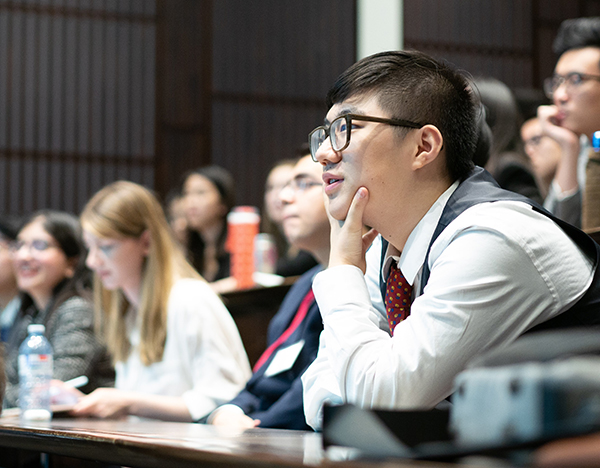
Our students thrive in a tight-knit community of like-minded, ambitious, creative people who support and motivate each other. They have their own club, common room, events, peer mentorship program, activities and more — creating a strong and collaborative learning environment for all. EngSci students also benefit from services and advising facilitated by a dedicated EngSci Office.
Joining EngSci also means tapping into an unparalleled global network of graduates who can support students in their own career journeys. EngSci alumni are esteemed researchers and professors, entrepreneurs, professionals in diverse sectors and industry leaders all around the world. They regularly return to campus as guest lecturers and mentors to share their insights and wisdom with current EngSci students.
Where can EngSci take you?
In addition to providing exceptional academic training, our program develops fast learners with strong analytical, problem-solving and organizational skills who thrive on working independently or in teams.
Graduates tend to be well-rounded, with interests beyond the classroom that include leadership, volunteerism and community-building.
Over half of our graduates pursue post-graduate studies at top graduate or professional schools around the world in fields including engineering, science, medicine, architecture, business, law, and public policy.
Graduates of the program are also in high demand for direct entry into professional engineering-related careers and are confident in pursuing grand challenges.
All EngSci graduates are eligible to become licensed professional engineers.
The Engineering Science program will produce graduates with the knowledge, skills, vision, and judgment to be leaders among global citizens and among their generation of engineers.
We aim to:
- attract top students from across Canada and around the world, and contribute vigorously to their education and development as responsible global citizens, future leaders of society, and leading practitioners of the engineering sciences;
- offer advanced engineering science curricula and incorporate the best pedagogical methods in their delivery; and
- provide students with exceptional research and professional experience opportunities, support and guide them in their extracurricular pursuits, and challenge them to be proactive learners, deep thinkers and responsible citizens.