

Transportation systems are crucial to the economic strength, quality of life, and environmental sustainability of cities, regions, and countries. In the Toronto region alone, the economic impact of traffic congestion in 2024 is estimated at over $10 billion.
Moving people and goods efficiently has become ever more challenging as cities grow, supply chains expand, and technologies like AI-powered “smart” traffic systems, self-driving trucks, and ride-hailing platforms change the landscape. At the same time, electric vehicles, e-bikes and scooters, and the expansion of public transit are changing how we get around.
EngSci’s Transportation Systems Engineering major is the first undergraduate program of its kind in North America to address the need for experts in this growing field.
The program offers a unique combination of specialized focus, technological emphasis, interdisciplinary integration, and alignment with U of T’s research strengths.
Much like the human body, urban transportation is a system of interconnected systems. Transportation engineers work within this technical complexity and its interaction with minute-by-minute human behaviour and decision-making. They tackle congestion, safety, and climate challenges, build data-driven models and decision tools, and apply statistics, machine learning, and policy insight to solve long-standing mobility problems.
In the EngSci major, students gain the required expertise across technical and non-technical domains to work in this inherently multidisciplinary and growing field. By integrating advanced engineering with critical topics like urban planning and sustainable mobility, graduates are prepared to lead in a field in which emerging technologies such as AI-powered transportation management and autonomous vehicles play a critical role.
The major’s curriculum is a unique combination of two pillars of transportation engineering:
- transportation planning and operations (informatics, traffic and road network modelling, and economics of transportation), and
- emerging technologies (vehicle automation, big data/machine learning, and sustainability).
The core curriculum focuses on data analytics, optimization and simulation methods, transport systems planning and operations, and economics and design, providing more in-depth studies than traditional civil engineering programs.
Technical electives let students explore transportation-related topics, such as robotics, sustainability, supply chain management, urban systems and economics, travel behaviour, and more.
 Students apply their theoretical knowledge in two dedicated design courses supervised by industry leaders who guide them through from initial planning to final implementation. Students can work on complex transportation design projects like transit priority corridor, complete street and cycling network plans, traffic signal coordination schemes, multimodal hub layouts, automated vehicle integration, and more.
In the final year, students complete research thesis projects supervised by faculty members from across U of T Engineering and the Faculty of Arts & Science with connections to relevant stakeholders. Topics might include improving transit reliability, modelling travel demand for new transit investments, evaluating road safety countermeasures, or assessing the equity and climate impacts of emerging mobility options.
The major's courses are taught by professors from U of T’s Departments of Civil & Mineral Engineering. Instructors have strong collaborations with industry and government, helping to ground the program in academic rigor and industry relevance.
Students benefit from U of T’s exceptional transportation research strengths. Access to research centers like the U of T Transportation Research Institute, Mobility Network, Robotics Institute, and School of Cities, along with industry and government partnerships, enrich students' experiential learning and research opportunities.
FAQs
Transportation engineers design and optimize the systems that move people and goods—streets, transit, cycling networks, freight, and future technologies like autonomous and on-demand mobility.
It’s not a narrow niche: the skills are those of a systems and data engineer, applied to one of the most important, visible, and rapidly changing infrastructures in society.
They use math, data science, optimization, and increasingly AI and machine learning to model travel demand, predict behaviour, and manage networks in real time. Their work ranges from improving bus reliability and road safety to planning low-carbon mobility and smart cities.
Unlike many existing programs that focus predominantly on civil engineering or transportation as a sub-discipline, EngSci’s transportation systems engineering major offers a comprehensive, multidisciplinary approach with extensive coverage of technology, data science, and economics.
U of T and other Canadian universities offer robust civil engineering programs with transportation components but without the interdisciplinary training required for contemporary challenges (e.g. mobility as a service, freight and logistics, advanced traveler information systems, traffic control). Some institutions offer transportation studies within broader engineering or planning degrees.
EngSci’s transportation systems engineering major aligns with industry needs by integrating diverse fields such as data science, economics, and policy, producing graduates with a more holistic skill set suited to the evolving demands of the transportation sector.
Graduates can bridge worlds: they speak the language of engineers, data scientists, software developers, planners, and policymakers. They can connect detailed models and datasets to real operational and policy decisions; connect civil infrastructure with digital systems (sensors, control, information services); and connect public-sector goals with private-sector innovation. That ability to translate between disciplines and sectors is a major part of their value in a rapidly evolving transportation field.
Transportation Systems is where technical tools get used on real cities.
Building on EngSci's rigorous Foundation Years, you'll use statistics, optimization, data science, and modelling, but instead of abstract problems, you'll apply AI/ML and systems thinking to congestion, safety, transit reliability, climate targets, and new technology like AVs and on-demand mobility.
Far from limiting you, this makes you a systems and data engineer with domain depth in one of the biggest growth areas: mobility, logistics, smart cities, and infrastructure.
Graduates can work in consulting, tech, government, or the broader analytics/ML space—but with a portfolio of projects that show you can make complex systems work in the real world.
The Transportation Systems Engineering major is a direct application of what you learn in the EngSci Foundation Years.
The math and physics you see in Years 1–2 (calculus, differential equations, mechanics) underpin how we model traffic flow, transit operations, and network dynamics. Probability and statistics become the basis for demand forecasting, reliability analysis, and understanding uncertainty in how people travel. Computing and numerical methods show up again in simulation, optimization, and data-driven decision tools used to design and operate transportation systems.
The EngSci emphasis on systems thinking and open-ended design carries over to this major. But now, instead of just solving equations, you’re using the same analytical mindset to make complex, human-influenced systems—cities, transit networks, logistics chains—work better in the real world.
Yes!
The labour market for transportation engineering professionals is experiencing significant growth due to increasing urbanization and the rapid evolution of transportation technologies.
Labour market research shows that over the next decade, this field will experience a moderate labour shortage, driven by an aging workforce and increased demand from residential construction and population growth. As cities expand and infrastructure evolves, new technologies are transforming transportation systems—creating a need for graduates who combine technical expertise with practical problem-solving skills. As a result, the job outlook is rated as good across Canada for this field.
U of T Engineering's PEY Co-op Program provides students access to various positions in transportation systems engineering and transportation planning. Prominent industries are in the architectural, engineering and design related services, consulting, and governmental organizations (municipal and provincial). Some top employers over recent years include Arcadis, BA Consulting, Parsons, WSP, MTO, City of Toronto, City of Mississauga, and Region of Peel.
Upon graduation, engineers trained in this field have the flexibility to move between job types and between private and public sectors.
Yes. While civil engineering graduates often pursue additional training in transportation before entering the workforce, graduates from EngSci’s major will be well-positioned to enter the workforce directly, with a rigorous foundation in math, statistics, and relevant systems.
Transportation engineering research is highly interdisciplinary, with experts from engineering, computer science, operations research, urban planning, economics, and more working together on complex topics.
Sustainability, efficiency, and equity are key goals in research on intelligent transportation systems, infrastructure and network optimization, AI-enabled traffic management, sustainable transportation, urban development centred on multi-modal transportation systems, and integrated regional planning.
Some examples of current research topics are travel modelling, self-learning adaptive ramp metering, self-learning intelligent traffic signal control to reduce congestion, and much more.
To find more information about specific electives listed below, visit the academic calendar.
AER372H1: Control Systems
AER525H1: Robotics
APS305H1: Energy Policy
CIV460H1: Engineering Project Finance and Management
CIV516H1: Public Transit Operations and Planning
CIV536H1: Urban Activity, Air Pollution, and Health
CIV577H1: Infrastructure for Sustainable Cities
CIV580H1: Engineering Management of Large Projects
ECE356H1: Introduction to Control Theory
ECE411H1: Adaptive Control and Reinforcement Learning
ECE470H1: Robot Modeling and Control
ECO333H1: Urban Economics
ECO333H1: Urban Economics
ECO375H1: Applied Economics I
ECO375H1: Applied Economics I
MIE360H1: Systems Modelling and Simulation
MIE363H1: Operations and Supply Chain Management
MIE365H1: Advanced Operations Research
MIE376H1: Mathematical Programming (Optimization)
MIE523H1: Engineering Psychology and Human Performance
MIE524H1: Data Mining
MIE566H1: Decision Making Under Uncertainty
MIE567H1: Multi-agent Reinforcement Learning
ROB301H1: Introduction to Robotics
RSM270H1: Supply Chain Management
RSM370H1: Supply Chain Management
STA447H1: Stochastic Processes
In Year 4, you’ll complete a research thesis project where you'll apply data, modelling, and systems thinking to a real transportation problem, often using real-world datasets from transit agencies, municipalities, or mobility providers.
Recent examples of the kinds of projects students undertake include:
- Analyzing how travel demand and transit use will change in the future.
- Designing ways to integrate micromobility (e-scooters, bike-share, etc.) into existing transportation networks.
- Studying people’s willingness to pay for vehicle automation and estimating system-level impacts of automated vehicles.
- Evaluating the economic and ridership impacts of alternative routes or service patterns for intercity or regional rail.
- Building and calibrating micro-scale traffic simulation models informed by regional demand models.
- Assessing how shared mobility services or new cycling infrastructure affect equity and non-motorized travel demand.
All EngSci students can customize their studies by completing U of T Engineering minors and/or certificates. These allow you to explore complementary subject areas about which you are passionate, and are designed to enhance your skill set, obtain interdisciplinary knowledge, and improve your career prospects.
The choice of minors or certificates is personal and depends on each student’s interests.
Did you know...?
Students can further their knowledge in student clubs
like Sustainable Engineers Association and the Institute of Transportation Engineers Student Chapter.
Sample Courses
This course trains students to use advanced statistical and machine learning methods on large, noisy transportation datasets to build predictive models that support real-time operations and long-term planning.
This course focuses on modern techniques to optimize the performance of a transportation system with emphasis on traffic networks in congested urban areas. The course introduces the broad components of Intelligent Transportation Systems (ITS) Engineering then moves in to more in-depth analysis of advanced traffic management and information systems as a core component of ITS.
The course covers both fundamentals as well as advanced techniques. Topics include
history of ITS, ITS user services and subsystems, ITS interopera bility and system architecture, enabling technologies for ITS, introduction to telecommunication technologies for ITS, introduction to control theory for transportation systems, traffic flow modelling, static and dynamic transportation network analysis, in cident detection, freeway control, and surface street network control. Some advanced topics such as the use of artificial intelligence in ITS are also introduced.
This course combines data-driven safety analysis with engineering design to help students identify high-risk locations, understand human factors, and design countermeasures that reduce collisions and protect vulnerable road users.
These project courses immerse students in multi-disciplinary, team-based work with real clients, where they design and evaluate transportation solutions from concept to implementation-ready proposals.
A typical project might involve redesigning a busy urban corridor to improve transit reliability and cycling safety, using real traffic, ridership, and collision data to justify design choices and quantify impacts.
This course focuses on the design and management of freight, delivery, and passenger mobility systems—including on-demand services and e-commerce logistics—highlighting their role in economic productivity and sustainability.
This course applies optimization, simulation, and queueing theory to urban problems such as signal timing, transit scheduling, and facility location, teaching students how to make complex city systems work more efficiently under constraints.
Where this major can take you
Our graduates work in a wide range of industry and research.
Graduates of this EngSci major are prepared to step into a new world of technology- and information-driven transportation system planning, design and operations, and to undertake research at the graduate level.
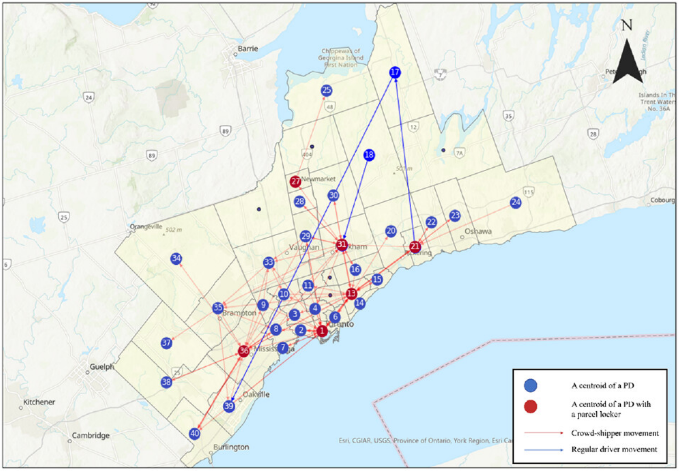 Graduates have a unique combination of rigorous engineering science, data and computational skills, and specialized training in transportation systems and human travel behaviour and can pursue a variety of impactful roles, including infrastructure design engineers who create and manage transportation networks like roads and bridges, urban planners who develop smart and sustainable city transportation systems, and data analysts who optimize traffic flow and implement intelligent transportation technologies. They may also work as policy advisors or consultants or engage in environmental roles focused on reducing the ecological impact of transportation systems. Opportunities also exist in research and academia, where they contribute to innovations and advancements in the field.
Potential employers for graduates include car companies, management consultants, transportation and logistics companies, municipalities, public transportation organizations, and more.
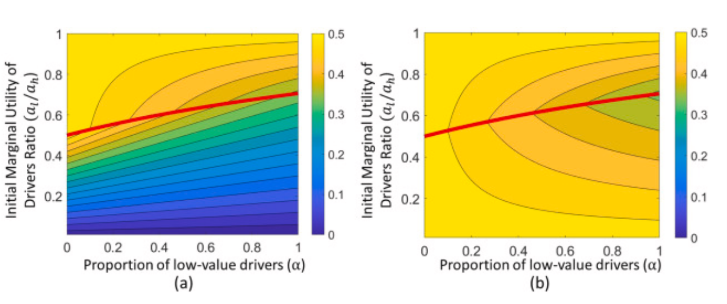 For those wishing to pursue graduate school, they will be well-equipped for research areas such as travel demand and behavioural modelling, transportation data science and AI, traffic flow theory and control, public transit planning and operations, freight and logistics analytics, sustainable and equitable mobility policy, transport economics, and public policy and finance.

Chair of the Transportation Systems Engineering major
Professor Khandker Nurul Habib (CivMin)
Professor Habib is an internationally renowned expert on transportation modelling who develops mathematical, behavioural models of how people move from one location to another, and the many ways in which they change their behaviour in response to changes in infrastructure. His models are used by municipal planners when making evidence-based planning decisions.