
Division of Engineering Science, University of Toronto
Thesis Supervisor Guide ESC499 · 2026-27
Welcome to the Engineering Science Thesis course. We greatly appreciate your engagement with undergraduate research and look forward to working with you in the coming year.
This guide gives you an overview of the course and some tips on supervising undergraduate students.
Thesis contacts:
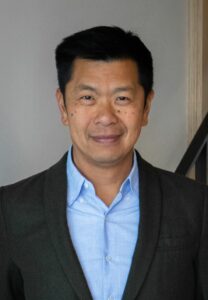 |
Thesis course coordinator Alan Chong Associate Professor, Teaching, ISTEP Office: SF B670 alan.chong@utoronto.ca Reach out to Alan if: you’d like to talk about student or project concerns, have questions about deliverables or assessment, or have broader questions about the thesis course. |
Alan Chong is the thesis course coordinator for 2025-26, and a former Associate Chair in Engineering Science. Alan has supported the integration of communication instruction in Engineering Science for many years, and brings expertise in engineering teaching and learning and student experience to the role. Starting in 2008-09, Alan Chong and Lisa Romkey updated the thesis course significantly, adding asynchronous instructional modules, assessment guidelines and rubrics; this work is used at other universities and has been presented at CEEA and ASEE.
|
 |
Thesis teaching assistant Reach out to Chris if: you have a question about logistics, rubric and grade submission, or presentation scheduling. |
Chris is an EngSci graduate and current Master’s student with a wealth of experience working as a teaching assistant across Engineering Science courses. We’ll be corresponding with you throughout the year to share documentation, remind you of deadlines, and check in on student progress. |
Course description & learning outcomes
Engineering Science is one of the only undergraduate programs at the University of Toronto with a required undergraduate thesis, giving students the opportunity to conduct, document, and experience engineering-related research as an undergraduate. The course is structured to support that process, particularly the documentation and management of the research.
Roughly half of EngSci graduates go on to pursue graduate school, and the program has a history of graduating top researchers in academia, government and industry. We believe undergraduate research is beneficial for all students, helping them hone project management, communication and problem-framing skills ‚Äî it’s considered a high-impact practice in undergraduate learning.
The thesis course is defined by six major learning outcomes, reflecting the Faculty’s Graduate Attribute frameworks for investigation and communication:
- Write a strong research proposal
- Identify a gap or problem in a science/engineering field for the purposes of investigation
- Clearly state the objective of the work
- Develop a plan or method for addressing that gap or problem
- Conduct and write a literature review, summarizing the state of a science/engineering related field
- Execute a major, independent research project in a relevant field of study
- Select a set of tests to be conducted
- Select, plan and apply the methods for collecting information
- Identify limitations of the tests and methods used, and their impact on results
- Generate and analyze data as part of a major research project
- Analyze the results
- Formulate the conclusions
- Compare conclusions with previous work
- Present research effectively – the gap, objectives, methods, designs, results and claims
- Structure a logical argument in an engineering context
- Organize communication for an intended audience
- Develop clear, correct and cohesive sentence and paragraph structures
- Deliver oral communication effectively to an intended audience
- Create clear and appropriate visuals to represent engineering ideas
- Incorporate feedback from a variety of audiences to improve the research approach and the communication of scientific and engineering ideas
Supervisor responsibilities
As a supervisor, you are responsible for the following:
- Support the student in framing a project suitable for an undergraduate thesis and creating a project plan for the year or semester, with key deliverables.
- Provide ongoing mentorship and support through regular check-ins as the student works to complete their research objectives.
- Support the student in meeting gaps between existing and required skills and knowledge.
- Support graduate students and post-docs who may be taking a role in the ongoing mentorship of the undergraduate student.
- Ensure students receive any project-specific safety training required, based on project or departmental needs, and that any research ethics requirements are met.
- Assess and provide feedback on the thesis proposal, interim report, final report and, if applicable, the thesis presentation, in a timely fashion. Overall, expect to spend at least 5-6 hours in total assessing the formal deliverables, plus additional time for project-specific interim feedback.
You may hold your student’s final presentation within your own research group, choosing your own parameters, or have the student join a set of EngSci-organized presentations, where supervisors are invited to attend and contribute to assessment. A rubric is available either way, and a final grade and feedback will be provided to the student.
Co-supervision
Co-supervision, with another faculty member at U of T or even from another institution, is permitted. This is most often used when a project is interdisciplinary, or when other project parameters require the engagement of two faculty members. If you are co-supervising, we recommend ensuring the student is clear on your expectations and roles — for example, whether the student submits deliverables to both supervisors, meets regularly with both, and so on.
Engagement of PhD students & post-docs
The supervision of undergraduate research is an important training opportunity for HQP. While supervisors remain ultimately responsible for project supervision and student assessment, we welcome the engagement of graduate students and post-doctoral fellows in the thesis course. If you’d like to add a doctoral student or post-doc to our contact list for all course matters, please email engsci.thesis@utoronto.ca.
Timelines & deliverables
The table below summarizes key deliverables, with due dates for one-semester fall (F), one-semester winter (S), and full-year (Y) students. Students submit one copy directly to the supervisor and one copy to course staff via Quercus; late submission requests and penalties are processed by course staff.
| Due date | Deliverable | Weight |
|---|---|---|
| Sept. 21, 2026 (F/Y/S) | Thesis Topic & Supervisor Request Form Outlines proposed topic and supervisor for divisional approval. 1% course-grade deduction if submitted late. |
Pass/Fail |
| Oct. 9, 2026 (F/Y) Jan. 15, 2027 (S) |
Thesis Proposal | Description | Rubric A 1-page document modelled on the NSERC PGS-M application, outlining motivation and an overview of the proposed work. 10%/day late penalty. |
5% |
| Oct. 23, 2026 (F) Nov. 27, 2026 (Y) Feb. 12, 2027 (S) |
Thesis Progress Update Form Students report challenges or resource needs to the course coordinator. 1% course-grade deduction if late. |
Pass/Fail |
| Nov. 3, 2026* (F) Jan. 18, 2027* (Y) Mar. 1, 2027* (S) |
Interim Report | Description | Rubric 10-15 pages: revised proposal as introduction, literature review, summary of work completed, and a work plan for the remainder. *Final due date -supervisors may set an earlier one. 10%/day late penalty. |
10% |
| Early Dec. 2026 (F) Late Mar.-Early Apr. 2027 (Y/S) |
Final Thesis Presentation | Rubric A 10-minute talk plus 5 minutes of questions, assessed on communication. Open to faculty, staff, students and the public. |
10% |
| Dec. 8, 2026 (F) Apr. 13, 2027 (Y/S) |
Final Thesis Document | Description | Rubric and Rough Guide Introduction, revised literature review, methods and results. 1.5% deduction per day submitted after the last day of classes. |
75% |
Thesis documentation
Throughout the year we’ll provide documentation for each deliverable – proposal, interim report, presentation and final report – including instructions and a fillable grading rubric. These, along with the course syllabus, are attached as appendices to this guide.
You can request “observer status” on the ESC499 Quercus site to access materials, asynchronous videos and other resources your student can see – email engsci.thesis@utoronto.ca to request this. Observer status gives you access to grades and details for your own students only: once added, a drop-down in the top right of your Quercus screen will let you switch to your student’s name to access the course.
Managing your student(s)
Every student-supervisor relationship looks a bit different — some projects sit within a larger research group where a PhD student or post-doc provides day-to-day guidance, while others are student-initiated with you offering all direct supervision. A few recommendations for success:
- Offer a regular touchpoint. We encourage students to meet with supervisors every one or two weeks – even a short meeting improves accountability and gives room for informal feedback. If a PhD student or post-doc is taking this role day-to-day, we’d still recommend some direct engagement from you.
- Be clear about your communication preferences. Students are encouraged to “drive the bus” on project management, but let them know your preferences for scheduling meetings, how much lead time you need to review work in advance, and which channels you prefer.
- Set up project milestones. Most students benefit from milestones between the major deliverables. Many spend significant time generating and analyzing data and not enough organizing and writing – encourage a thesis journal and interim deadlines of your own.
- Keep expectations reasonable. Fourth-year students carry a heavy course load – 4 or 5 other courses including capstone design – alongside graduate school or job applications and co-curricular commitments. Our guidance to students is roughly 8-10 hours per week of productive thesis work.
Centennial thesis award
Each year, one student from the course receives the “top thesis award” at graduation. At the end of the academic year, supervisors are invited to submit a nomination letter based on the student’s overall progress, project management, documentation, and the “wow factor” behind the research. More details will follow later in the year.
Additional support
Professional language support
Multilingual or professional-language-learning students may benefit from additional communication support. You may advise them to visit the Engineering Communication Program Tutoring Centre to have their needs assessed and set up a plan going forward.
Library support
Some students benefit from an appointment with the Engineering Librarian for literature review support – see the staff directory.
Student advisors
You’re always welcome to reach out to Alan as a first point of contact, but for particular cases – such as student mental health or other complex needs – please also reach out to Brendan Heath, the Engineering Science Year 3&4 Academic Advisor, at engsci34@utoronto.ca.
Other key policies & practices
- Faculty assessment policies. Students may not submit work after the last day of classes without extenuating circumstances and an approved petition. Please don’t extend a student’s final deadline without permission from course staff – additional project work can instead be negotiated through, for example, paid summer employment. Late submission requests for all deliverables must go through the course coordinators via the Faculty’s petition system. We will be asking for grades and completed rubrics (available above) approximately two weeks after submission (understanding that there may be delays).
- What counts as a thesis. Students may select a project with any faculty member at U of T, as long as it’s relevant to engineering – utilizing engineering knowledge or skills in some way, even outside a strictly engineering context. Reach out to the course coordinators with questions about project suitability.
- Half vs. full-year thesis. Students in biomedical, energy systems, robotics, machine intelligence and physics must complete a full-year thesis; students in aerospace, electrical & computer, and engineering mathematics, statistics & finance may choose a full (Y) or half (H: F/S) year thesis. Most students complete a full-year project.
- Generative AI / ChatGPT. The university leaves handling of generative AI largely to individual instructors. A general statement on the course syllabus outlines our expectations – see the appendices. Questions or concerns can go to Alan Chong.
- Industry partnerships & IP questions. If a project includes an industry partner, an agreement covering IP assignment should be in place between you, the university and the partner. An undergraduate thesis can only be held back from publication for one year, as a general university rule, and students retain rights to IP based on the work they complete. Reach out to Lisa Romkey with questions – university legal/IP conversations can be facilitated as needed.
- Student collaboration. More than one student may work on the same research project, but each student must complete their own individual project with distinct research goals and deliverables.
- Research ethics. Projects involving human or animal subjects require ethics approval, often under an existing protocol. If a new protocol is needed, use the My Research system: designate your student as a “Student PI Assistant,” create a new protocol (U of T/Investigator Submission), and add a note indicating the project is part of “Engineering Science Undergraduate Thesis Program, ESC499.” Given the direct PI arrangement, ethics here functions like a typical research submission rather than the course template option.
- Thesis grading guidelines. See the grade bands below, taken from the FASE Interpretation of Course Marks. Questions on grading a student’s deliverables can go to the course coordinators.
Thesis grading guidelines
80-100%: Exceeds expectations
- 90-100% (A+): work that has clearly and substantially surpassed course expectations, demonstrating superior grasp of subject matter and consistent ability at extension.
- 80-89% (A/A-): work that has surpassed course expectations, demonstrating superior grasp of subject matter and ability at extension.
60-79% Meets expectations
- 70-79% (B, Good): work that has solidly met course expectations, showing general success at solving complex problems and some ability at extension.
- 60-69% (C, Adequate): work that shows some success at solving complex problems and has generally met course expectations, especially with core material and simple problems.
50-59% Below expectations (D)
- Work that demonstrates mastery of the minimum essential ideas, concepts and processes, but not the ability to solve complex problems or critically interpret course material – meeting only the most basic course expectations.
0-49% Fails (F)
- Work that is either incomplete or does not meet minimum expectations for the course.
Practically speaking, most EngSci thesis students achieve above 80% as a final course grade.